

A flat roof rarely fails on a convenient day. It’s usually mid-storm, over a bank holiday weekend, or the moment water starts coming through a ceiling that was fine the week before. In that moment, the difference between a genuinely reliable roofer and a name pulled from a search result can mean the difference between a contained repair and thousands of pounds of internal damage.
This guide walks through exactly what to check before you hand your keys, your roof, and your budget over to someone during an emergency, along with how to spot a reliable roofer in Dorset who can actually turn up when it matters. The Flat Roofing Company has handled emergency callouts across the county for over 15 years, so this guide reflects what genuinely separates a dependable contractor from one that isn’t.
Why Emergency Roof Repairs Can’t Wait
A small leak rarely stays small. Water finds the path of least resistance, and once it’s inside a roof structure, it travels along joists, soaks into insulation, and tracks down internal walls long before a visible stain appears on a ceiling. By the time damp patches show up, the damage underneath is often more extensive than it looks from below.
Dorset’s coastal weather makes this worse. Strong winds, driving rain, and salt exposure along the coast place constant strain on flat roofing systems, and storm damage can loosen roof coverings or crack seams in a matter of hours. An emergency callout that happens within a day or two of damage occurring can often be resolved with a targeted repair. Left for weeks, the same issue can mean replacing waterlogged insulation, damaged decking, or even structural timbers.
Signs You Need an Emergency Roofer Right Away
Not every roofing issue counts as an emergency, but certain signs mean you shouldn’t wait for a routine appointment.
- Active water ingress, such as dripping, staining, or a bulging ceiling during or shortly after heavy rain.
- Visible storm damage, including lifted felt, torn membrane, or debris that’s punctured the roof surface.
- Sudden gaps or splits around flashing, upstands, or roof edges following high winds.
- A sagging roofline or any sign the roof deck itself may have been compromised.
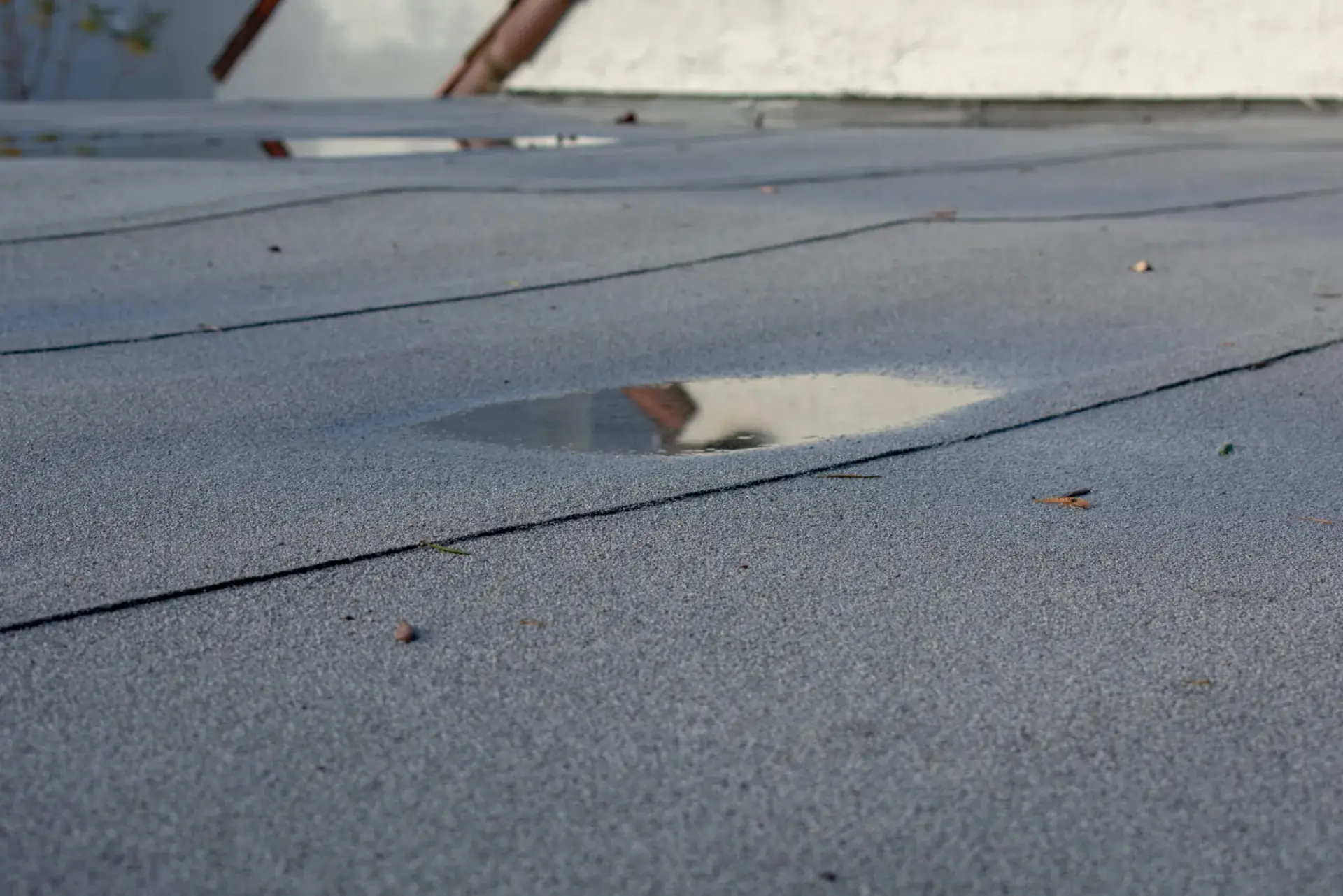
- Blocked or overflowing gutters causing water to pool and back up under roof coverings rather than draining away.
If any of these apply, the priority is stopping further water ingress, not waiting to compare five quotes.
What to Look for in a Reliable Dorset Roofer
Genuine Local Accreditations
Anyone can claim to be a professional roofer. Accreditations are one of the few checks you can verify independently before a contractor sets foot on your property. Look for membership of the Federation of Master Builders, CHAS health and safety accreditation, CITB registration, and Trustmark certification, since these bodies carry out independent checks on the standard of work a company delivers.
A Genuine Local Presence
A roofer based in Dorset, rather than one dispatching a subcontractor from several counties away, tends to respond faster and understands the specific conditions local roofs face, from coastal exposure around Poole and Weymouth to more sheltered inland areas. The Flat Roofing Company covers the whole county for exactly this reason, from Dorchester to Weymouth.
Fast, Honest Response Times
A reliable roofer gives you a realistic timeframe rather than a vague promise. During an active leak, a same day or next day response should be achievable for a local contractor, and any company worth using will tell you clearly if that isn’t possible rather than leaving you waiting without an update.
Transparent Pricing Before Work Begins
Emergency situations create pressure, and some contractors use that pressure to justify inflated quotes with little explanation. A reliable roofer carries out an on-site assessment first and provides a clear, itemised quote before any work starts, so you know exactly what you’re paying for and why.
Proper Diagnostic Tools, Not Guesswork
Locating the source of a leak on a flat roof isn’t always obvious, since water can travel a considerable distance from where it enters to where it appears inside a building. A properly equipped roofer uses electronic integrity testing and thorough leak detection methods to pinpoint the actual source, rather than patching the first visible defect and hoping it solves the problem.
Real Warranties on the Work Carried Out
Emergency repairs should still come with a guarantee on workmanship, even if it’s a smaller job than a full re-roof. The Flat Roofing Company backs every repair, large or small, with a clear warranty in writing.
Questions to Ask Before You Hire
A short conversation before booking a callout can save considerable stress later. Worth asking directly:
- Are you accredited by the Federation of Master Builders, CHAS, CITB, or Trustmark?
- How quickly can someone attend for an active leak?
- Will I receive a written quote before any work begins?
- Do you use leak detection equipment, or will the repair be based on a visual inspection alone?
- Is there a warranty on the repair itself, separate from any wider roof warranty?
- Can you provide recent local reviews or completed project examples?
A contractor who answers these clearly and without hesitation is generally a safer bet than one who deflects or rushes the conversation toward booking a visit.
What Happens During a Genuine Emergency Repair Callout
A proper emergency response follows a consistent process regardless of the size of the job. First comes an initial phone conversation to understand the nature of the problem and how urgent it is, followed by a site visit to inspect the damage directly rather than relying on a description alone. From there, a competent roofer identifies the source of the leak using visual inspection and, where needed, integrated testing equipment.
Once the cause is confirmed, temporary weatherproofing measures are often applied immediately to stop further water ingress, particularly if a permanent repair needs specific materials or drier conditions to complete properly. A full repair follows as soon as it’s practical, along with a check of surrounding areas of the roof to confirm nothing else has been compromised by the same storm or general wear.
Common Emergency Repairs Across Dorset
Certain issues come up repeatedly across the county, particularly on older properties or roofs nearing the end of their expected lifespan.
- Felt splitting and blistering, common on ageing felt roofs that have lost flexibility over time, particularly around joints and edges.
- Membrane punctures, usually caused by storm debris or accidental damage during other work on or near the roof.
- Flashing failure, where movement around chimneys, upstands, or parapet walls creates a gap for water to enter.
- Blocked gutters and downpipes, which cause water to back up and find its way under roof coverings rather than draining away as intended.
- Skylight or rooflight seal failure, a common source of leaks that can be mistaken for a general roof problem when the fault sits specifically around the fitting itself.
Preventing Future Emergencies
The most reliable way to avoid an emergency repair is regular inspection before small issues become large ones. A planned cleaning and maintenance package clears debris, checks outlets, and catches early signs of wear before they turn into active leaks. For roofs that are difficult to access safely, a drone survey provides a detailed, up to date picture of roof condition without the cost or disruption of scaffolding.
Upgrading an ageing felt roof to a modern single-ply membrane system also reduces emergency callouts significantly over time, since single-ply resists cracking, shrinkage, and blistering far better than older bitumen-based materials, particularly through Dorset’s coastal weather swings.
Local Coverage You Can Rely On
Property owners across Dorset, from domestic homes to commercial sites, benefit from a roofer who already knows the area rather than one learning local conditions on the job. The Flat Roofing Company has responded to emergency repairs throughout the county for over 15 years, covering everywhere from Poole and Bournemouth through to Dorchester, Weymouth, and the surrounding villages.
Final Thoughts
An emergency roof repair isn’t the moment to gamble on an unfamiliar contractor. The signs of a reliable roofer are consistent and checkable: genuine accreditations, a real local presence, honest pricing, proper diagnostic equipment, and a warranty behind the finished work. Taking a few minutes to confirm these details, even under pressure, gives you a far better chance of a repair that actually holds.
If you’re dealing with an active leak or storm damage anywhere in Dorset, get in touch with The Flat Roofing Company for a prompt assessment and an honest, upfront quote.